Willkommen zu Krasse Links No 92. Die Lage spitzt sich an allen Fronten gleichzeitig zu und DDoSt wieder meine Verarbeitungskapazitäten für das anstehende Staffelfinale. Aber nun spreizt Eure BATNA-Pfade, heute versenken wir die Fallhöhe des Existenzrechts von Government Bonds durch den Moat der X-Apologie.
Nachtrag zu KL91: Die letzte Folge eingelesen mit Alis KI-synthetisierter Stimme (€). Hier unser Podcast zur letzten Folge und hier die aufgezeichnete Twitch Q&A-Session.
Außerdem gibt es eine freie Probefolge des eingelesenen Newsletters, nämlich der Ausgabe Krasse Links No 7, die in gewisser Hinsicht der konzeptionelle Startpunkt dieses Newsletters war – und seine emotionale Grundierung bleibt.
Max Fisher mit einem sehr erhellenden Video über die nun wirklich dräuende Öl-Apokalypse.
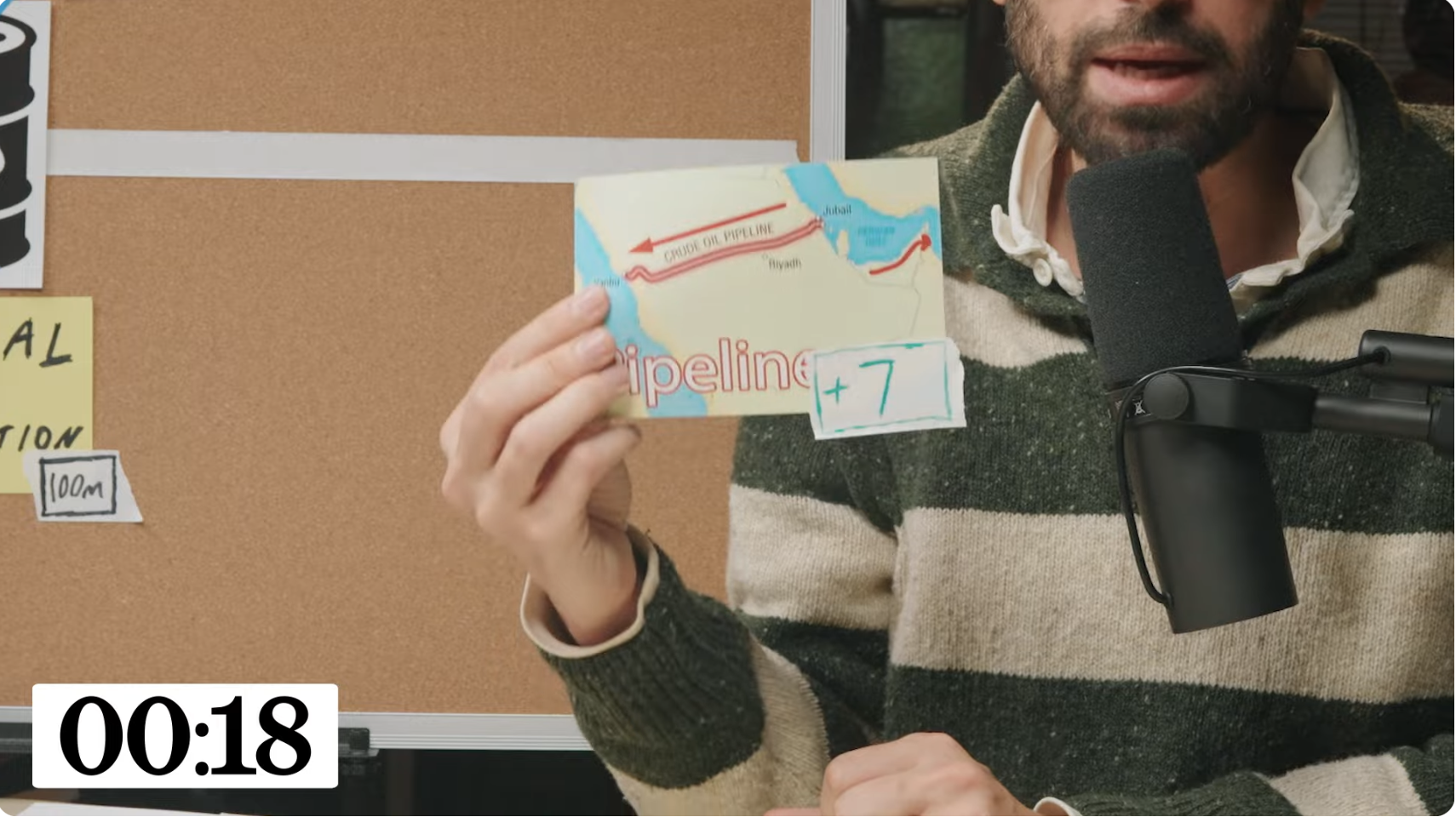
Denn inzwischen ist nicht mehr nur die Straße von Hormuz gesperrt (tatsächlich tröpfelt da mittlerweile wieder einiges raus, allerdings mit horrenden Kosten), sondern auch die saudische Ost-West-Pipeline, die bis vor kurzem noch einiges von dem Öl-Minus wieder wett machte, ist zu einem großen Teil zerstört und arbeitsunfähig. Und zu guter Letzt kontrollieren die Houthis (eigentlich „Ansar Allah„) nach einem großen Eroberungsfeldzug im Jemen die Straße von Bab al-Mandab.
Aus Sicht von z.B. Saudi-Arabien hat sich nicht nur die primäre Absatzstrecke für ihr Öl verschlechtert (in der Q-Function leiden sowohl Übergangswahrscheinlichkeit p als auch U_gelingt (also der Ertrag) deutlich), sondern auch die BATNA-Pfade, die das Öl sonst noch nehmen kann. (BATNA, zur Erinnerung, bedeutet „Best Alternative to Negotiated Agreement“ und ist in unserem Framework der relationale Bezugspunkt jeder Abhängigkeit, jedes Werts, jeder Fallhöhe, jedes „Moats“ und jeder Macht.)
Hinzu kommen die zerstörten Raffinerien in Russland, Iran und den Golfstaaten, die abseits vom Rohölpreis die Preise z.B. für Diesel und Kerosin treiben. Die Differenz von Ölpreiskurve und den Raffinerieprodukten im Großhandel (Futures) nennt sich übrigens Crack-Spread. Also die „Spreizung“ zwischen dem Preis des Rohstoffs und dem Preis des verbrauchbaren Endresultates.
Jay Martin hat meines Erachtens das beste Big-Picture-Video zum Endgame des Irankriegs vorgelegt und zwar für beide Seiten: Was versucht Iran zu erreichen, was versuchen die USA zu erreichen?
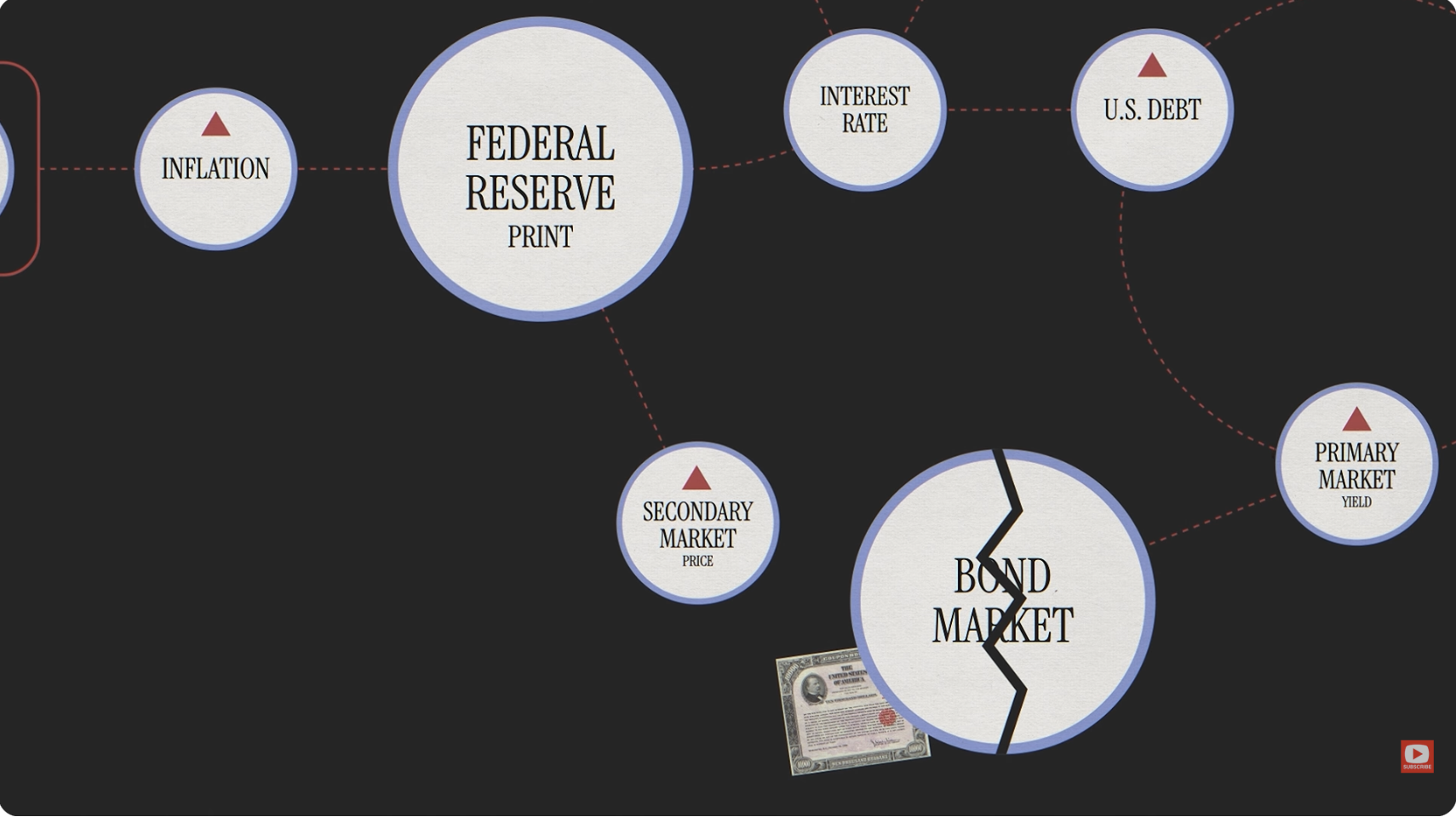
Einer der sichtbarsten Effekte des Irankriegs und der sich daraus ergebenden Öl-Apokalypse sind die gestiegenen Zinsen. Einerseits durch Erhöhung des Leitzinses durch die FED, die ihre geldpolitische Aufgabe vor allem darin sieht, die Inflation klein zu halten. Steigen die Preise zu sehr, tritt die FED durch Zinserhöhung auf die ökonomische Bremse.
Aber vorher waren bereits die Zinsen auf US-Staatsanleihen explodiert. Da Staatsanleihen immer auch die erwartete Inflation mit einpreisen – klar, wenn du dem Staat dein Geld gibst und es in Dollar zu einem bestimmten Zeitpunkt zurückerwartest, ist eines der Dinge, die du unbedingt in den Zinsen abgebildet haben willst, die Inflation.
Da die bereits ausgegebenen Staatsanleihen (Bonds) ja regelmäßig „fällig“ werden, muss der Staat sich ständig neues Geld leihen – allerdings bei steigenden Zinsen zu immer schlechteren Konditionen. Der Staat könnte theoretisch dagegenhalten und einfach mehr Geld drucken, was aber die Inflation nur weiter ansteigen und die Todesspirale beschleunigen würde (schon jetzt zahlen die USA mehr Zinsen, als sie für Verteidigung ausgeben.)
Das ist, laut Martin, Irans Endgame: die USA in diese Todesspirale zu zwingen, so dass ihnen kein anderer Ausweg bleibt, als vom Krieg abzulassen.
Das könnte allerdings trotz des Drucks schief gehen, denn die USA arbeiten mit einem völlig anders gelagerten strategischen Endgame. Sie wollen die wichtigste und möglichst einzige Quelle von fossiler Energie für die Welt werden. Nicht nur hat das die Trump-Regierung mehrfach offen ausgesprochen, auch alle ihre Handlungen sprechen dafür. Mit der Maduro-Entführung hatten sie sich bereits das venezolanische Öl unter den Nagel gerissen und auch wenn ihnen dasselbe in Iran nicht gelang, ist auch die aktuelle Engstelle für das Öl aus der Region ihrer Strategie zuträglich.
Wenn es ihnen gelingt, quasi in Zusammenarbeit mit dem Iran, die Ölzufuhr aus der Region lange genug abzuschnüren, werden immer mehr Staaten von US-Öl und Gas abhängen. Europa ist das beste Beispiel: die Abnahmemengen aus den USA sind in den letzten Monaten explodiert und mit dem Abkommen aus dem Juli letzten Jahres hat sich die EU verpflichtet, sogar 750 Milliarden Dollar an fossiler Energie abzunehmen.
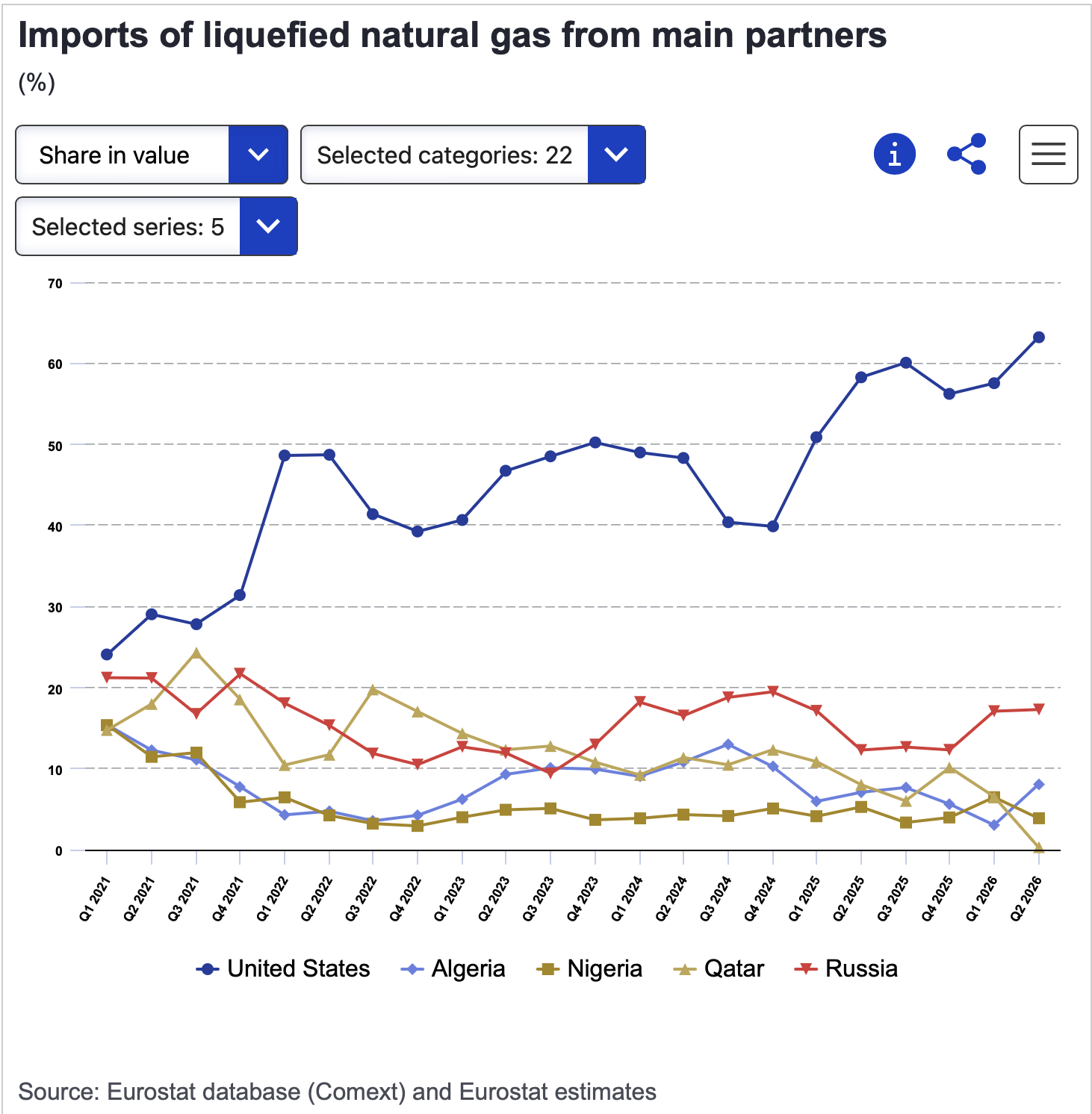
Mit der Ökonomie der Pfadgelegenheiten kann man das schön modellieren. Die Ölströme aus verschiedenen Teilen der Welt landen in allen Ländern der Welt an, doch das meiste Öl fließt in die OECD-Staaten. Je größer der Ölfluss, desto empfindlicher ist der abnehmende Staat gegenüber den Ereignissen in Iran. Und je unsicherer das Öl aus der Golf-Region wird, desto wertvoller werden die BATNA-Pfade aus anderen Regionen.
Da „Abhängigkeit“ (K_F_ab, wie wir hier sagen) der Spread zwischen aktuellem Pfad und seinen BATNA-Pfaden ist, erhöht sich die Abhängigkeit der EU von den USA, je mehr Pfadalternativen zu ihnen unsicher werden oder durch sie kontrolliert werden. Und diese erhöhte Abhängigkeit wird bereits durch ein Margen-Premium abgeschöpft und je mehr sie sich ausweitet, desto brutaler wird sie abgeschöpft, wie man bereits beim LNG beobachten kann, wo der Spread zwischen im Inland gehandeltem Gas ($3,10) und dem Preis für seine europäischen Abnehmer ($15,70) um 83% im Mai dieses Jahres gestiegen ist.
Nicht nur der Irankrieg treibt die Zinsen, ein weiterer wesentlicher Treiber ist der KI-Capex-Boom, also der Ausbau der Rechenzentrumskapazitäten aufgrund des KI-Hypes, wie Reuters (via Yahoo!-Finance) berichtet.
Dabei geht es nicht nur um Government-Bonds. Vor allem der Corporate Bond-Market ist in Aufruhr, weil KI-Konzerne so viel Papier auf den Markt werfen.
The market for highly rated corporate credit has split in two: bonds issued by AI-related firms are being met with caution, while those sold by so-called traditional issuers such as financial and industrial firms are prompting spirited bidding.
Dabei geht es gar nicht mal so sehr um Ausfallrisiken, sondern um die schiere Menge.
Gross debt issuance from hyperscalers is expected to hit a record $420 billion next year, up 60% from 2026 estimates, Goldman Sachs data show.
In comparison, overall US corporate issuance through August was up 30% from a year earlier to $1.9 trillion, according to the Securities Industry and Financial Markets Association trade group.
Dafür muss man verstehen, dass alle Bonds in gewisser Hinsicht miteinander um dasselbe Anlegergeld konkurrieren. Den Floor bildet quasi der Zinssatz des Government-Bond, also Staatsanleihen, die als die sicherste Anlageform gelten, denn im Gegensatz zu Unternehmen kann der Staat nicht so schnell pleite gehen. Die Qualität der anderen, privaten Bonds misst sich für gewöhnlich am Spread zum Government-Bond. Wirkt ein Unternehmen weniger vertrauenswürdig, muss es mehr Zinsen zahlen.
Spreads on AI-related issuers have remained persistently wider at around 115 basis points, according to the latest Goldman data. That compares with 78 basis points for the broader investment grade market, ICE BofA data showed.
Aber nicht nur Unternehmens-Bonds sind betroffen, sondern auch Government-Bonds selbst, weil sie um dasselbe Geld über dieselben Laufzeiten konkurrieren.
While AI spending has kept the economy out of recession, the pivot toward debt financing is increasing the supply of long-duration bonds, putting upward pressure on U.S. Treasury yields.
Normalerweise spiegelt der Spread die mangelnde Kreditwürdigkeit wider, bei KI treibt aber vor allem das Volumen der auf den Markt drängenden Bonds die Preise in die Höhe. Der Druck des KI-Wettrennens hat die Abhängigkeit von Kapitalflüssen der Branche so wachsen lassen, dass sie fast unabhängig vom Zins leihen.
The average debt rating of the five largest hyperscalers is A to AA+. With current spreads between 60 and 100 basis points higher than equivalent U.S. government bonds, this makes the longer-issued AI-linked debt attractive to the same pension fund and insurance buyers of long-term government debt.
This puts upward pressure on the yields of U.S. government long-dated bonds.
Das ist das Haupt-Problem, weil Government-Bond-Zinsen der „Floor“ praktisch aller anderen Kredite sind. Klar. Wenn du Abnehmer für deine Schulden suchst, musst du immer mehr Zinsen zahlen, als der Staat, denn du bist weniger kreditwürdig. Wenn aber beide, die USA und die KI-Unternehmen unelastisch zum Zins immer mehr Geld leihen, dann steigen die Zinsen eben so lange, bis sich niemand anderes mehr Geld leisten kann.
Viele regen sich über John Grubers X-Apologie auf und ich finde, durchaus zu Recht. Nur weil eine Nazikneipe inzwischen wieder gemütlich eingerichtet ist und ne Menge spannender Leute hingehen, geht man nicht in die Nazikneipe.
Und dennoch glaube ich – ohne es überprüft zu haben – John Gruber sofort, wenn er darüber schreibt, wie nützlich das Netzwerk für ihn ist. Denn mit den Netzwerkeffekten ist es ja so: sie sind zäh und klebrig wie altes Kaugummi. Die soziale Gravitation, die Twitter über viele Jahre aufgebaut hat, indem es ein Füllhorn von Special Interest Communities angesiedelt hat, ist selbst durch einen so toxischen Besitzer wie Musk nicht so leicht zu zerstören. Gruber schreibt:
You may not like it that X has re-found its footing under Elon Musk’s ownership, but it has. I’m citing Apple executives here but they’re far from alone. There are hundreds of interesting people and accounts I follow that post on X very regularly and do not post anywhere else at all.
John Grubers Hauptargument: Alle sind sie da. Alle, jedenfalls, auf die Gruber Wert legt. Als Chef-Applefanboy wird die Apple C-Suite natürlich als Erstes genannt, aber auch Casey Newton begründete neulich seine Rückkehr zu X damit, dass dort eben die KI-Entwickler*innen und Experten diskutieren.
Ich verstehe das Argument. Wenn einem ein Thema – zumal auch noch beruflich – wichtig ist, dann kann man es sich kaum erlauben, nicht auf der Plattform zu sein, wo es vor allem stattfindet.
Das ist die Krux an den Netzwerkeffekten. Sie wirken sowohl global, als auch lokal – lokal hier topologisch, statt geographisch verstanden. Schon Twitter setzte sich aus lose verknüpften Nischen zusammen. Jede Nische ein lokaler Netzwerkeffekt – alle Nischen zusammen ergaben den globalen Netzwerkeffekt.
Aus Sicht eines Users gesehen, ist die Q-Function eines Dienstes der Wert all der Accounts, denen man folgt, all der Communities, denen man angehört plus der Impact-Wert all der Leute, die einem folgen. Follower und Reichweite sind nicht portierbar. Je größer die eigene Followerschaft, desto höher die Wechselkosten. Die jeweiligen K_F_ab sind jeweils enorm heterogen zusammengesetzt und in ihrer Gesamtheit umso unersetzbarer.
I see more interesting posts on X than I do on Threads, Bluesky, and Mastodon combined. I wish that weren’t so but it is. Most people don’t want to think about politics so they don’t. Those people, when they want to participate in a Twitter-like social network, go to X.
Dazu kommt: Die Konkurrenz war von Anfang an zum Scheitern verurteilt.
- Statt, dass sich eine Gegenhegemonie zu X auf einer Plattform vereinigte, verstreute sie sich in alle Winde. Einige gingen zu Mastodon, einige zu Bluesky, einige zu Threads, wiederum andere zu LinkedIn. So konnten sich keine Netzwerkeffekte akkumulieren, die X gefährlich werden konnten.
- Diejenigen, die X verließen, waren eine Vorauswahl. Es waren Menschen, die a) politisch denken und interessiert sind (das sind die wenigsten Menschen) und b) eher links bis linksliberal eingestellt und daher von Musks politischem Einfluss abgestoßen (nochmal ein kleineres Subset des ersten Subsets). Durch diese frühe Pfadentscheidung konnte sich insbesondere auf Bluesky kaum etwas anderes ansiedeln, als linker bis linksliberaler Diskurs.
Ich mein: ich finds ok. Das ist nun mal meine Crowd, aber ich kann verstehen, dass andere sich dort nicht so aufgehoben fühlen.
The only network that compares to X, size-wise, is Threads — but Threads’s algorithm is weirder than X’s now, and the content I see there is relatively boring. My Threads timeline is full of engagement bait without being engaging. And if you want to judge a platform by its owner, “I’m grossed out and/or appalled by Elon Musk so I’m going to Mark Zuckerberg’s joint” isn’t a way to avoid being grossed out and/or appalled by the owner. Bluesky and Mastodon are too small for most people to care about — and, worse, they are the networks where politics are, in my experience, unavoidable.
Es gibt diesen Witz:
Two men are walking in the woods when they see a bear
One man bends down to tighten the laces on his shoes.
The other man looks at him and says, „Are you crazy? You can’t outrun a bear!“
The first guy, while tying his shoes, replies, „I don’t need to outrun the bear. I just need to outrun you.“
So ist das auch mit den Netzwerkeffekten. Die Attraktivität des Dienstes muss nicht objektiv gegeben sein, um einen positiven Feedbackloop hinzubekommen. Man muss nur mehr Value bieten als der BATNA-Pfad – und zwar nicht global, sondern in jeder Nische einzeln. Wenn die Alternative für die meisten Nischen Zuckerberg heißt und der Rest sich auf drei Plattformen verteilt hat, muss X nicht gut sein. Es muss nur nicht der langsamste Läufer sein.
Vielen Dank, dass Du Krasse Links liest. Da steckt eine Menge Arbeit drin und bislang ist das alles noch nicht nachhaltig finanziert. Im September bin ich auf € 499,21- gekommen, also von den notwendigen 1.500,- immer noch weit entfernt. Mit einem monatlichen Dauerauftrag kannst Du helfen, die Zukunft des Newsletters zu sichern. Genaueres hier.
Michael Seemann
IBAN: DE58251900010171043500
BIC: VOHADE2H
Dieser Newsletter ist nicht auf Reichweite ausgelegt, aber will dennoch Menschen erreichen. Du kannst dem Newsletter helfen, indem du ihn Freund*innen empfiehlst und ihn auf Social Media verbreitest.
Cory Doctorow hat nochmal kurz und anschaulich das Problem mit dem Diskurs um das Urheberrecht aufgedröselt. Die unternehmensgesteuerte Propaganda hat Kreativen über Jahrzehnte eingeredet, sie seien eigentlich Kapitalisten, die ein „geistiges Eigentum“ an ihren „Werken“ hätten, wenn sie in Wirklichkeit Arbeiter*innen sind, die für die eigentlichen Kapitalisten die Kohlen schleppen.
Property rights are capitalism’s holy sacrament, so of course, it’s natural to treasure any property right you can lay claim to. But this is a trap. Creative workers aren’t asset speculators, we’re workers. When we bargain with a media company to sell them our copyright, we’re just bargaining to sell our labor, not our property.
Das Haupt-Problem mit dem „Du bist auch Kapitalist“-Frame ist, dass darin der Machtunterschied zwischen einzelnen Kreativen und den Verwertern ausgeblendet wird. Aber der Machtunterschied ist eben genau das, was deine Marge bestimmt.
But here’s the thing about property rights: the most reliable predictor of how many property rights you must give up in a sale isn’t how many property rights you started with – it’s how much bargaining power you have. For 50 years, governments have expanded copyright in every way, making it last longer, cover more works and restrict more uses, all backstopped by ever-steepening penalties. 50 years later, media companies – our bosses – are larger and more profitable than they’ve ever been, and we’re poorer than we’ve ever been. The share of the money generated by our labor has declined, even as our rights over the product of that labor have expanded.
Wir können das mit der Politischen Ökonomie der Pfadgelegenheiten leicht in unser mechanisches Modell einfügen. Die Abhängigkeit deines Gegenübers ist dein Leverage, deine Abhängigkeit von ihm ist sein Leverage. Die Frage ist also, wie austauschbar bist du für ihn, wie austauschbar ist er für dich?
Und hier hat sich einfach eine Entwicklung weiter zugespitzt, die bereits schlecht war: Labels wurden aufgekauft, Verlage sind fusioniert, aus einer breiten Verwertungslandschaft sind wenige Monolithen geworden – kurz: deine BATNA-Pfade wurden terminiert und deine Margen entsprechend von den wenigen verbliebenen Verwertungsriesen aufgefressen, wie ich letztes Jahr in einem Vortrag versucht habe, deutlich zu machen.
Ein Mensch namens Brandon Thomas hat mal eben die gesamte Adobe Suite von Claude nachprogrammieren lassen und stellt das Ergebnis unter dem Titel „ArtCraft“ als Open Source ins Netz. Mashable:
From Adobe Premiere to Photoshop to After Effects, Thomas recreated them all with help from AI in Rust, a programming language. Named PhotoCraft, FilmCraft, DesignCraft, EffectCraft, PdfCraft, VectorCraft, and LightCraft, each duplicated one of the signature apps found in Adobe’s software suite for creatives.
Die Alphaversion ist beeindruckend nahe am Original, allerdings noch Glitchy und mein Pet-Verdacht ist, dass das auch deswegen so super funktioniert, weil Big-Tech bei seiner Trainingsdaten-Gier auch die eigenen Repositories in den Hut geworfen hat.
Thomas has just released WordCraft, DeckCraft, and GridCraft (along with additional creative duplicates like SoundCraft, DesignCraft, and CADCraft), which are his take on Microsoft Word, PowerPoint, and Excel.
Um die wirtschaftlichen Auswirkungen des Ganzen zu erfassen, muss man verstehen, dass Software ein Null-Grenzkosten-Produkt war (das also pro ausgeliefertem „Stück“ keine zusätzlichen Kosten verursachte), aber dennoch zum Standardpreis abgerechnet wurde. Wenn Kosten und Preis fix sind, dann bestimmt Skalierung die Marge.
Doch das funktioniert nur so lange, wie deine Software keinen BATNA-Pfad hat. Deswegen machte Open Source Microsoft früh Ärger, deswegen brach Firefox Microsofts Internet-Explorer-Hegemonie auf – die dann allerdings wieder durch Chrome okkupiert wurde, aber immerhin mit Open Source Variante.
Aber allein die Tatsache, dass die Open Source Projekte die proprietären Software Suiten zwar in ihrer Macht begrenzen, aber nicht wirklich verdrängen konnten, gibt einen Hinweis darauf, dass es so einfach nicht sein wird, die Software-Imperien ins Wanken zu bringen.
Der eigentliche „Moat“, also der „Burggraben“ eines Pfads zu seinem BATNA-Pfad, den populäre Software genießt, liegt nicht im Code, sondern im Kleinklein der Dateiformate, der eingeübten Handgriffe Millionen von Mitarbeiter*innen, ihren angestammten Gewohnheiten und der Teamkompatibilität des Ersatzpfads, etc. Der Lock-in liegt nicht auf Layer 1, also der materiellen Realität, sondern auf Layer 2, den Erwartungen und vor allem Layer 3, den Erwartungserwartungen. Und diese Ebenen sind träge und lassen sich auch mit KI nicht einfach umprogrammieren.
Die Koalitionsbildung in Berlin schien fast an der Personalie Vanessa Emde zu scheitern (sie gehen jetzt weiter), von der Grüne und SPD nach eigenen Aussagen annahmen, dass die per Direktkandidatur ins Abgeordnetenhaus gewählte Linkenpolitikerin wegen ihres angeblichen „Antisemitismus“ nicht in die Fraktion aufgenommen werden sollte.
Davon abgesehen, dass eine solche Entscheidung nur in demokratischer Abstimmung der Fraktion getroffen werden kann, es also gar nicht glaubhaft versprochen werden konnte, hab ich mich gefragt, was genau ihr vorgeworfen wird.
Ich habe da keine tiefe Recherche gemacht, aber worauf immer wieder hingewiesen wird, ist der Ausspruch, den sie bei einer Rede verwendete:
„Es gibt kein Existenzrecht für Staaten, Menschen haben ein Recht zu existieren.“
Das ist er. Das ist ihr „Antisemitismusskandal“. Das Äußern einer einfachen, unbestreitbaren Wahrheit, die jeder mit weniger als 2 Minuten Recherche verifizieren kann. Es gibt kein „Existenzrecht“ für Staaten, nicht für Israel, nicht für Deutschland, nicht mal für den Vatikan. (Es hilft, sich die Begriffs- und Verwendungsgeschichte der Phrase anzuschauen, hier oder hier)
Superschlaue Erbsenzähler wenden jetzt ein, dass es doch sehr wohl ein „Selbstbestimmungsrecht der Völker“ gibt und ein „Recht auf unverletzte territoriale Souveränität“ usw. aber erstens ist das Völkerrecht ein Recht der Völker und garantiert nicht das Recht auf eine bestimmte Form der Staatlichkeit und zweitens finde ich diesen Einwand alleine deswegen niedlich, weil ein Sich-Halten an Völkerrecht doch gerade das ist, was die Kritiker*innen von Israel verlangen?
Kaum ein anderer Staat bricht so regelmäßig und unapologetisch das Völkerrecht wie Israel, mit all seinen illegalen Kriegen, Besatzungen, Annexionen, Belagerungen und dem aktuell immer noch stattfindenden Genozid, der – im Gegensatz zur behaupteten Bedrohung der jüdischen Bevölkerung Israels, die Existenz der Palästinenser ganz konkret, hier und jetzt bedroht.
Das bedeutet natürlich nicht, dass das Völkerrecht für Israel daher nicht zu gelten habe, aber es bedeutet sehr wohl, dass es bei der Formel „Existenzrecht Israel“ um etwas ganz anderes geht.
Tomer Dotan-Dreyfus hat in seinem Newsletter der Formel „Existenzrecht Israels“ mehrere Funktionen zugeschrieben:
It’s about a few things. As already hinted at, Israel’s right to exist is an interpretable concept that allows the state to persecute unfavorable political voices. The grey zone is large enough for this to become an actual tool of political suppression. Take the recent comment by Israeli genocide scholar Omer Bartov in an interview with ZEIT: “I am for a Jewish state, only not this one”. Is that questioning Israel’s right to exist? Or the Israeli philosopher Omri Boehm’s binationalism? The federation suggested by Yonatan Zeigen, son of peace activist Vivian Silver who was murdered on October 7th?
„Wie stehst du zum Existenzrecht Israels“ ist im deutschen Diskurs sowas wie die Gretchenfrage der Staatsräson. Wenn du dieses nichtexistente Recht verneinst, giltst du als „Leugner“ des israelischen Existenzrechts, was im Imaginären staatstragender deutscher Mitteextremist*innen kurz vor Holocaustleugnung rangiert. Damit bist du draußen, aus der Gemeinschaft der Staatsräsongläubigen und damit nicht satisfaktionsfähig für Politik generell. Siehe der Fall Emde.
Damit nimmt das „Bekenntnis zum Existenzrecht Israels“ die Rolle des Shibboleth der Unterwerfung ein, ähnlich dem „2 + 2 = 5″ von Winston Smith in 1984. Eine Lüge kann eine Uniform sein.
Ich würde noch hinzufügen, dass „Israels Existenzrecht“ vor allem eine universelle Erlaubnisstruktur – eine Erlaubnisfabrik – ist, bei dem der Signifikant „Israel“ zwar nicht leer, aber doch sehr flexibel gehalten wird.
Israel in welchem Staatsterritorium? Unklar. Israel inklusive welcher Bevölkerung? Auch den okkupierten Gebieten? Auch dem halbautomatisierten Hühnerkäfig Gaza? Sind Nichtjuden mitgemeint? Was ist mit den Menschen in den besetzten Gebieten im Libanon oder auf den Golanhöhen? Unklar.
Hauptsache ist, dass Israel ein Recht hat, zu existieren und damit auch zu besetzen und zu okkupieren, was dafür eben nötig ist, denn das ist das Wichtige: alle anderen umliegenden Staaten und Völker haben dieses Existenzrecht nicht, jedenfalls nicht im gleichen Maße.
Der diskursive Trick besteht dann darin, mit „Israels Existenzrecht“ ein L3-Narrativ mit maximaler K_F_ab aufzugleisen, dessen BATNA-Pfad vordefiniert mitgeliefert wird: Nämlich die völlige Auslöschung der jüdischen Bevölkerung vor Ort. Nicht, dass das im Bereich des Möglichen von Hamas oder Hisbollah liegt, aber allein der von manchen geäußerte Wunsch reicht hier, ein absolut gesetztes Sicherheitsdispositiv geltend zu machen.
„Entweder darf Israel genauso agieren, wie es aktuell tut, oder Du forderst die zweite Shoa, du Antisemit!“.
Ausblendend, dass es noch andere BATNA-Pfade gäbe. Eine Einstaatenlösung, in der Moslems, Christen und Juden, Palästinenser und Israelis friedlich, diskriminierungsfrei und demokratisch zusammenleben – also das, was zum Beispiel Vanessa Emde fordert.
Und wer jetzt sagt, dass das ja unrealistisch sei: ja, durchaus. Aber auch nicht unrealistischer als eine Zweistaatenlösung. Und selbst wenn nicht: seit wann ist angebliche „Naivität“ ein politisches Ausschlusskriterium? Die Abschaffung der Sklaverei in den USA und die Überwindung der Apartheid in Südafrika galten ebenfalls lange als unmöglich.
Dotan-Dreyfus führt außerdem noch die aktuelle Umrüstung des deutschen Industriestandorts hin zum Rüstungsexporteur an, die diese Frage mit ökonomischer Fallhöhe versieht:
A second reason is Germany’s transition to a war economy. While car factories are being turned into weapon factories and new munition factories open, the German government is madly increasing its defence spending to be, as a percentage of the general annual budget, even higher than that of Israel, at the cost of health and education, of course, and arms deals with Israel are being sealed reportedly in billions of taxpayers’ euros. More and more of the German economy is relying on the production of arms, and it is making us all hostages to the whims of advocacy groups who always push for more restrictions on freedom of speech for Israel’s sake, waving this military dependency of Germany on Israeli import and export like a sword of Damocles.
Zuletzt verortet Tomer Dotan-Dreyfus die Rolle des „Existenzrecht Israels“ tiefer im Selbstverständnis Deutschlands und seiner Rolle im westlichen Staatenbund und offenbart die eigentliche diskursive Mechanik der Staatsräson.
When Germany speaks about Israel’s right to exist, it talks about its own right to exist. This cannot be clearer in the years after the term “Staatsräson” was popularized to describe what Israel’s safety is for Germany – a raison d’etat of the German state. Literally Germany’s right to exist. Germany needs to justify to itself its own existence, as it should justify it to the rest of the world, after having committed crimes against humanity on a scale that should have made it obvious to the world that it is safer without Germany than with it. If the world would be safer without Germany, why should this state exist?
Israels Recht zu existieren ist in Wirklichkeit Deutschlands Recht zu existieren. Israel ist in der Psychologie deutscher Staatsräsonler das moralische Faustpfand seiner eigenen Kontinuität und Eingebundenheit in die Welt.
When Germany is talking about Israel, Germany is talking about itself. The German government’s support of the exclusionary ethnonationalist element in Zionism’s ideological project of the state of Israel, in turn, legitimizes ethnonationalism back here in Germany. The order of things being protected is the order according to which the world is divided across ethnicities and bloodlines. In his ‘60s interview with TV moderator Günter Gaus, the first post-war German chancellor Konrad Adenauer explained his policies of reparations, especially the reparation agreement with the state of Israel, by saying that “the power of Jews in the world today shouldn’t be underestimated”, and that he wanted to get Germany back into the community of nations. From the start, this was about Germany first.
Dass diese Psychologie nach wie vor in der Tradition des Antisemitismus steht, macht das Adenauerzitat klar. Wir haben Millionen in Europa lebende Juden ermordet und vertrieben, von denen viele aber nun durch das Vehikel Israel – wie Deutschland – in das „zivilisatorische“ Projekt des „Westens“ eingebunden sind. „Frieden mit dem jüdischen Volk“ durch gemeinsame Einbindung in die koloniale Beutegemeinschaft, quasi.
Israel is often portrayed as the frontline of the West against whatever demeaning and sometimes dehumanizing adjective the speaker wants to use to describe the “global south”. But it isn’t Israel. It is Germany that is on the frontline of history. If Israel did not have the right to exist after having ethnically cleansed through genocide and other crimes against humanity such a small piece of land, what would it mean for Germany? And if it means Germany also does not have a right to exist, what does it mean about the UK? And France? And the US? And Italy? And Ukraine? The German move of obsessing over Israel’s alleged right to exist is nothing more than pushing the conflict line away from one’s own border into foreign territory. Germany can only afford to care about its victims once they become perpetrators and share the boat of guilt with it. What it cannot do and is becoming structurally impossible with the new legislation is to stand with people who are being victimized right now, in real time, not only by an ethno-national-state, but by the idea of it altogether. That is the actual function of Staatsräson: not protecting Jews, and not even really protecting Israel, but protecting a. Germany’s story about itself, which then serves to preserve b. The old world-order of European nation-states.
Die „Staatsräson“ ist mehr als die Staatsräson. Sie ist die „Staaten-Räson“. Sie ist die zentrale Erlaubnisstruktur der organisierten Gewalt des international hegemonialen Staatensystems nach europäischem Schema und damit die Protokollstruktur des Westens selbst.
